23 October 2026
Keeping 1,000 scholars from going quiet
In a program this size, nobody notices one person drifting away until it’s too late. What I learned running Mentor Me Collective’s Google programs about catching drop-off early.

Running Mentor Me Collective’s Grow with Google and Google Cloud Launchpad programs, I worked with more than 1,000 scholars a year. Grow with Google alone drew over 8,000 applications every cohort.
Getting people in was never the hard part. Keeping them in was.
Drop-off is quiet
Nobody announces they’re leaving a self-paced program. They miss one session, then a deadline, then they stop opening the emails. With 1,000+ scholars, nobody notices one person going quiet until it’s too late to help.
So the job isn’t to react to drop-off. It’s to see it coming.
Watch the signals, then step in
I tracked participation and completion in dashboards and flagged scholars who were falling behind. The point of the data was never the dashboard itself. It was knowing who needed a check-in this week.
From there, the support was simple and human: a personal check-in, an accountability group, office hours, a study session with peers. Small things, delivered at the right time, to the right person.
One rhythm, wherever you are
Scholars were spread across locations, time zones and learning tracks. Someone joining from a different time zone deserved the same experience as everyone else.
I standardised onboarding, communications and delivery so every cohort ran the same way, and built communication workflows across email, community platforms and virtual events. When the rhythm is predictable, people find it easier to keep up.

Build support around the learner
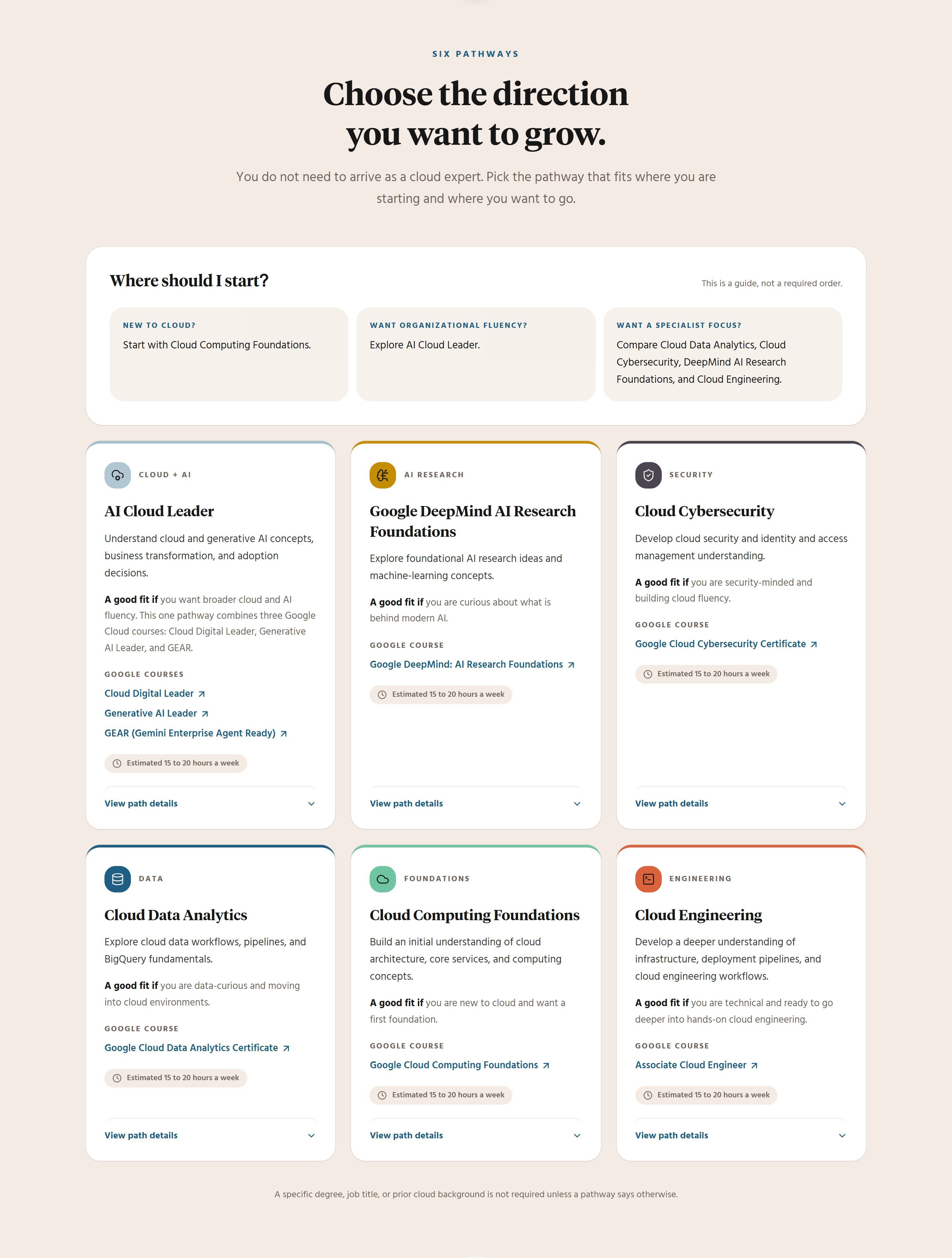
The Cloud Launchpad ran for twelve weeks across five pathways, from beginner Cloud Foundations to advanced Cloud Engineering and Cybersecurity. One support model couldn’t fit everyone.
So I built support around the learner rather than the track: accountability groups, peer learning and office hours, backed by cloud mentors and industry professionals for the technical questions. Beginners got the encouragement they needed. Advanced learners got people who could go deep with them.
Measure what the program is for
Enrolment numbers look good in a report. They say very little about whether a program works.
What matters is completion, engagement and where people end up afterwards. That’s what I measured, and that’s how I decided where support should go. Skills alone don’t land someone their first role, which is why the programs also ran résumé reviews, networking and career transition support.
What carries over
None of this is specific to scholarship programs. Any product with a long journey has the same problem: people leave quietly. Find the signal early, make the next step obvious, and put a person in the loop when it counts.