23 October 2026
Why I build what I design
Kwame Motors is my own car-parts marketplace. I designed it, own it and built it. Building it taught me that most product work is deciding who carries the risk when something goes wrong.
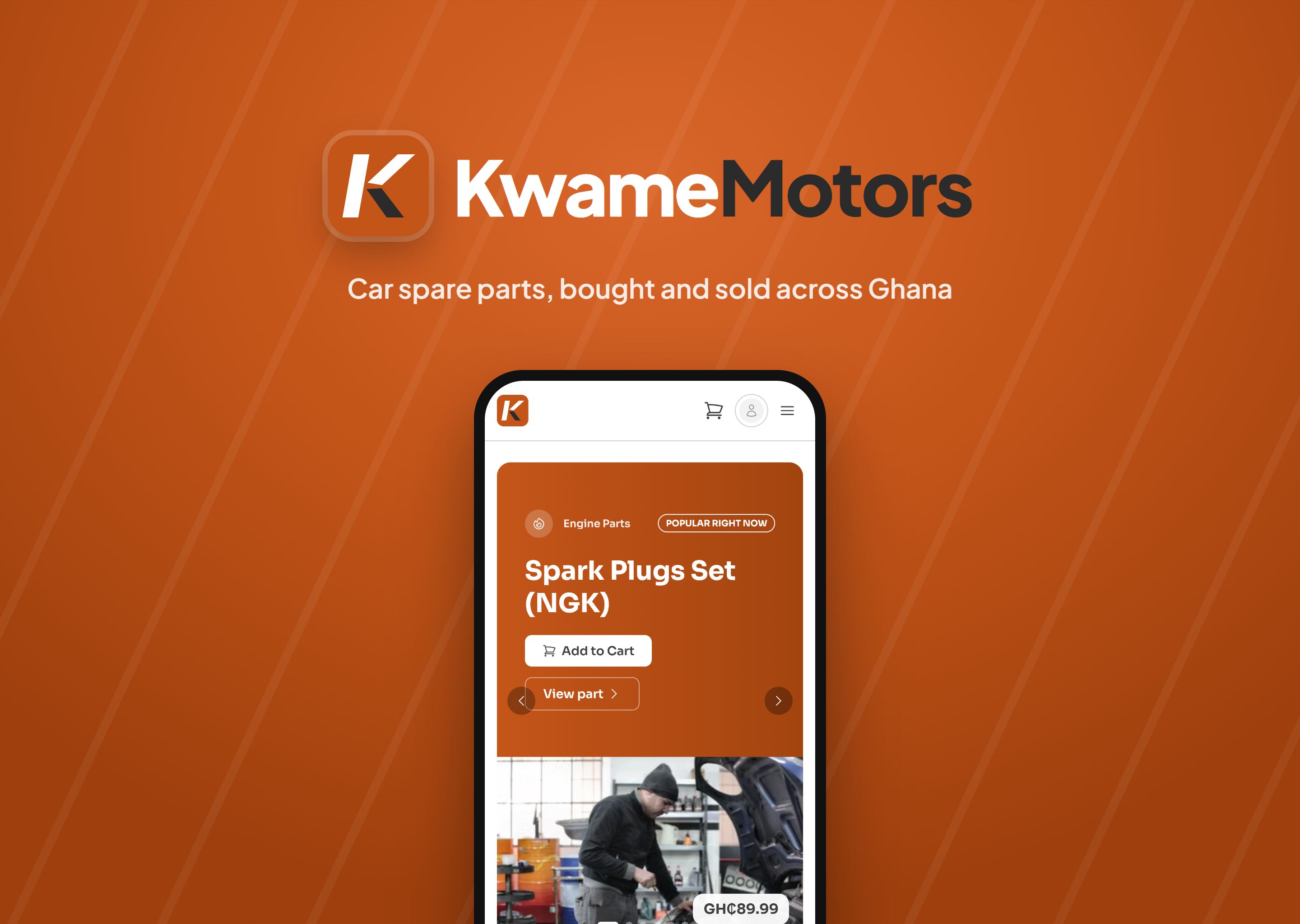
I describe myself as a designer, an owner and a builder. Kwame Motors is where all three meet.
It’s an online marketplace where buyers in Ghana find car spare parts and pay by Mobile Money, card or cash on delivery, and where sellers can run a shop without building one. I designed it, I own it and I built it.
The screens were the easy part
Designing the storefront and the checkout was the part I expected to spend my time on. It wasn’t.
Most of the work in a marketplace is deciding who carries the risk when something goes wrong. Who pays when an order is cancelled? When does a seller get paid? What happens to the money if the part is wrong?
Those aren’t engineering questions or design questions. They’re product decisions, and building the product myself meant I couldn’t avoid any of them.

A few calls I had to make
- Hold the money until the part arrives. Buyers don’t know the sellers, so online payments stay with the marketplace until delivery is confirmed.
- Keep cash on delivery. Plenty of buyers would rather pay when the part is in their hands, and forcing online payment would turn them away.
- Let new sellers start before they’re verified, with a clear badge, a listing limit and 30 days to complete verification. Payouts only go to verified sellers.
- Decide who pays the fee when an order is cancelled, and make it a rule, so refunds are predictable for everyone.
Why building matters to how I design
When you build what you design, every shortcut in the design shows up as a problem in the code, and every gap in the product thinking shows up as a bug. You stop designing screens and start designing how the whole thing behaves.
It also makes me a better partner to engineers. Handoff becomes a conversation, because I know what I’m asking for.
Like a growing branch
I’ve always seen my work like a growing branch, extending into new areas while staying grounded in the same fundamentals. Building is one of those branches. The fundamentals haven’t changed: define the problem clearly, make deliberate decisions, and pay attention to the details most people overlook.